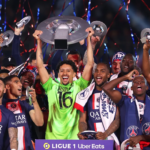
The 2022/2023 Ligue 1 season exposed one of the sharpest budget divides in European football. Paris Saint-Germain operated on an economic scale unmatched by any of its peers, while smaller clubs like Ajaccio, Clermont, and Angers functioned with a fraction of that capacity. This inequality didn’t just manifest on the pitch—it directly influenced the structure, calibration, and public perception embedded in betting odds.
Why Financial Power Directly Affects Odds Formation
In betting markets, team budgets act as proxies for structural capacity: deeper squads, higher consistency, and access to elite finishing quality. For bookmakers, that translates to narrower odds on rich teams and inflated prices on smaller ones. Yet the pricing isn’t linear; wealth doesn’t always guarantee predicted results. The difference between potential dominance and actual delivery forms the key to value discovery.
How Bookmakers Translate Budget Gaps into Market Prices
Bookmakers embed financial power into the opening line before considering recent form. In Ligue 1’s case, PSG and Marseille routinely opened as -1.5 or heavier favorites, while sides in the bottom third rarely had implied win probabilities above 20%. Those opening assumptions codify the “budget reality,” framing how traders and bettors alike interpret relative strength even before the ball is kicked.
| Category | Average Budget (€m) | Average Win Probability | Adjusted Handicap Range |
| Top 3 clubs | 400–600 | 68–75% | –1.25 to –2.00 |
| Mid-table range | 60–120 | 40–50% | –0.25 to +0.25 |
| Bottom 5 clubs | 25–40 | 18–28% | +0.75 to +1.50 |
This structural imbalance influences both trader behavior and public alignment—bettors see budget as symbolic certainty. The psychological effect of perceived superiority inflates top-team odds, compressing true value.
The “PSG Effect” and Systemic Distortion
When one club outspends the league by several magnitudes, the market becomes asymmetrical. PSG’s presence skews line distribution; opponents receive inflated scores for keeping games tight even if defeat remains likely. The ripple effect? Betting models overprice dominance yet underprice stalemates and limited-margin wins. Such scenarios birthed consistent edges for contrarian bettors seeking smaller but repeatable inefficiencies across the 2022/2023 schedule.
Interpreting Market Movement Through UFABET
Understanding how probability sentiment adjusts mid-season depends on continuous tracking. Observers who monitored real-time pricing through ufabet168 เว็บตรง, a sports betting service emphasizing odds progression and liquidity movement, could pinpoint where financial narratives lost predictive relevance. When PSG’s heavy spending failed to translate into consistent handicap coverage, late-season contraction in their lines revealed that traders eventually recalibrated expectation. Access to comparative views across fixtures helped bettors discern perception lag versus actual form correction.
H3: Mechanisms Behind the Overvaluation of Rich Clubs
Wealthy clubs command uncritical confidence, generating surplus trust during market formation. Three variables explain this:
- Historical success anchoring public faith.
- Star reputation bias driving emotional buying.
- Structural underestimation of parity in closed-score leagues.
Once these perceptions take root, even marginal decline in performance rarely shifts public odds immediately. Consequently, there exists a temporal inefficiency—value favoring disciplined bettors over impulsive fandom.
Middle-Class Teams and the Value Gap
Teams with moderate budgets—Lens, Lorient, Reims—proved empirical outliers. Despite limited resources, coherent tactical identity allowed them to outperform baseline financial assumptions. These clubs expanded institutional efficiency, showing that organization could rival resources in predictive value. Betting lines initially anchored below their true performance but gradually aligned once data stabilized by midseason.
When Budget Advantage Becomes a Betting Liability
Excessive financial might dilutes value when pricing converts dominance into unrealistic expectation. PSG, Monaco, and Marseille endured inflated closing lines through much of the season. Their challenge wasn’t to win, but to win big enough to justify handicap premiums. Statistically, they succeeded less than implied, creating inversion potential where conservative wagers outperformed emotional over-backs.
Broader Predictive Insight from casino online Probability Models
Variance within financial ecosystems mirrors probability distortion evident in casino online modeling. In both contexts, perceived advantage (budget or house edge) doesn’t always guarantee superior returns; it guarantees predictable expectancy that erodes when participants chase high-margin outcomes. Recognizing this parallel teaches bettors that imbalance often creates hidden equilibrium—where disciplined interpretation of variance exceeds following apparent strength.
Limits of the Budget-Odds Correlation
Budget disparity simplifies forecasting but misleads when misapplied. Injuries, congested fixture lists, and motivation fluctuation weaken pure financial logic. Smaller clubs performing above efficiency can misprice entire segments of the market for months, as happened with Reims under Will Still. Overreliance on spending metrics leads to cognitive rigidity—the enemy of adaptive analysis.
Summary
Ligue 1’s 2022/2023 budget hierarchy shaped betting odds long before form materialized, embedding wealth perception into price behavior. Yet the most profitable opportunities arose not from following financial power but from identifying when it ceased to justify pricing bias. Recognizing how capital dominance, emotional overreaction, and structural disparity interact allows bettors to treat wealth not as certainty but as a complex variable whose impact must always be measured, never assumed.